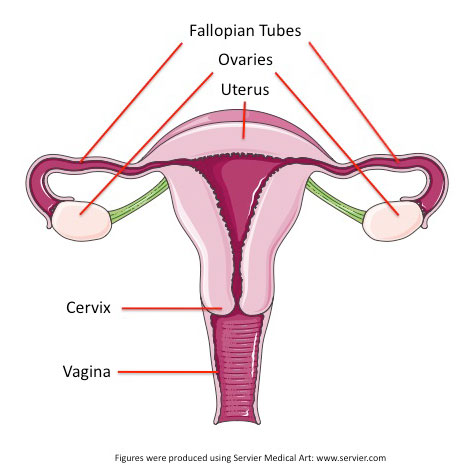
The fallopian tubes, also know as uterine tubes, are two thin tubes that connect the ovaries and uterus. An ovum (egg) that is released from an ovary will travel through a fallopian tube and into the uterus. Each fallopian tube is comprised of three sections: the isthmus, ampulla, and infundibulum.
Fecundity is a term that refers to the potential for successful reproduction.
A person who belongs to the sex that produces eggs, and that is capable of childbearing. Human females typically have two X chromosomes.
Fertility is the ability to conceive a baby.
Fertility preservation is the use of specific medical interventions to protect the fertility of individuals whose disease or disease treatment may lead to infertility.
The practice of traveling to another country to receive treatment for infertility.
Fertilization is the event that occurs when a sperm and an egg unite to produce a zygote. During normal fertilization, the haploid male and female gametes fuse to produce a diploid zygote.
A fertilization membrane is a membrane that forms around the egg after fertilization in order to prevent polyspermy.
A fetal membrane is the tissue surrounding the fetus that works to protect, nourish, and assist in the excretion and respiration of the developing fetus. The fetal membranes include the chorion, amnion, and allantois. Healthy fetal membranes are required for favorable pregnancy outcomes.
The fetal origins of adult disease (FOAD), also known as Barker's hypothesis, claims that fetal stresses encountered during gestation can ultimately lead to adult diseases, such as hypertension, heart disease, stroke, and diabetes. Twenty years ago, a professor in the United Kingdom, Dr. David Barker of the University of Southampton, showed that low birth weight is a risk factor that may later contribute to the development of coronary heart disease. This is a problem both in the Western and in the developing world. In the Western world, expectant mothers often do not nourish themselves with the correct balance of vitamins and nutrients, and they may even be underweight or overweight due to this problem. This can cause their child to be born with a low birth weight. In the developing world, chronic malnutrition is still a significant problem, and this is often due to a lack of resources available for expectant mothers in these countries. In 1995, the British Medical Journal named this theory “Barker's hypothesis.”
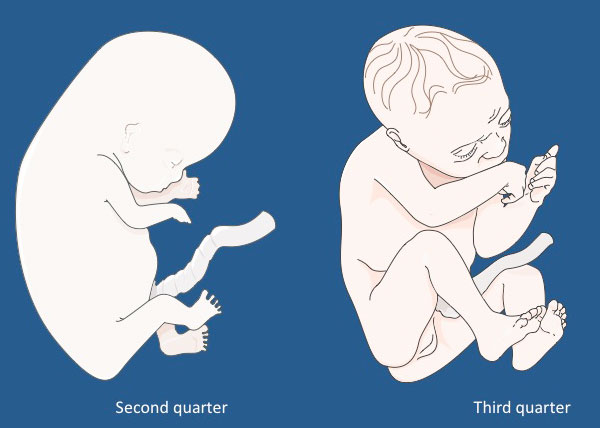
In humans, the term fetus is used to describe a developing organism that has reached the eighth week of developmental age (following fertilization).
A fibroid, also known as a uterine leiomyoma, is a benign (non-cancerous) tumor of the uterus. Fibroids are fairly common, occurring in 20-40% of women. They are typically asymptomatic but can result in painful intercourse, heavy menstruation, frequent urination, and, rarely, infertility.
Fimbria is a fringe or fingerlike structure located at the ends of fallopian tubes. Fimbriae facilitate egg movement through the fallopian tubes.
Fixation is the process of preserving tissue through chemical means to retain its structure.
Folic acid is a B vitamin that is important for women to take before becoming pregnant and in the early weeks after fertilization occurs. 400 micrograms of folic acid a day is proven to help prevent neural tube defects (NTDs), which are brain defects of the spinal cord and brain that occur in the first trimester of development.
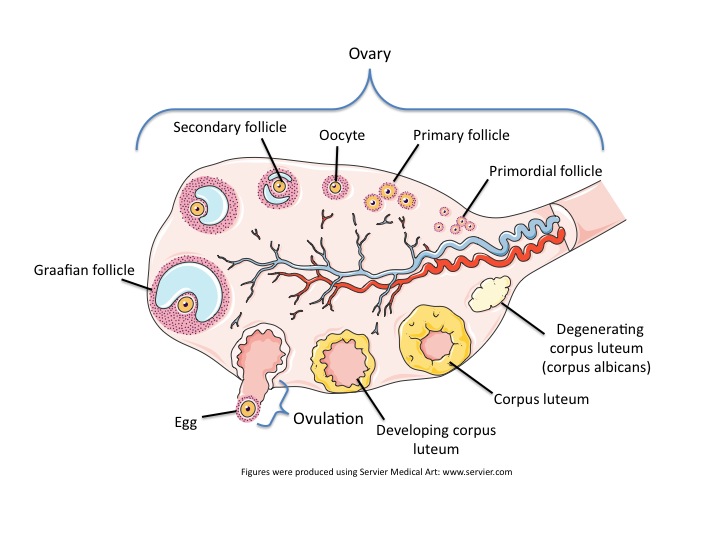
The follicle is the basic functional unit of the ovary.
Follicle stimulating hormone (FSH) is a hormone made by the pituitary gland that affects the gonads (female ovaries and males testes). In females, it stimulates growth of the ovarian follicles.
A follicle that has progressed from the primary to the secondary, more mature stage of growth will display an accumulation of follicular fluid known as the follicular antrum.
Follicular fluid is a liquid component present inside the antrum of a mature follicle, surrounding the oocyte. The follicular fluid contains hyaluronic acid.
The follicular phase is the portion of the menstrual cycle in which the ovarian follicle develops and matures. This half of the menstrual cycle begins on the first day of menses and ends with ovulation. The follicular phase is characterized by a gradual rise in the steroid hormone, estrogen.

Folliculogenesis is the process of ovarian follicle development. In order to reach the ovulatory stage, an ovarian follicle will pass through the following stages: primordial (resting), primary, secondary (pre-antral), tertiary (antral), and, finally, the pre-ovulatory (Graafian) follicle stage. According to dogma in the field, in females, the peak number of ovarian follicles occurs in the fetus at mid-gestation and is approximately seven million. This number then declines to two million at birth, half a million at puberty, 25 thousand at the age of 37 years, and less than one thousand at menopause. This progressive decline in follicle count with age is due to a natural breakdown process called follicular atresia that affects 99.9% of all follicles.
Follistatin is a protein that binds to the hormone activin. It is produced in the ovary and pituitary gland and is one of several proteins that regulate FSH secretion by controlling the activating hormone, activin.
Follitropin alpha is an endogenous form of FSH that is often used in women undergoing IVF.